
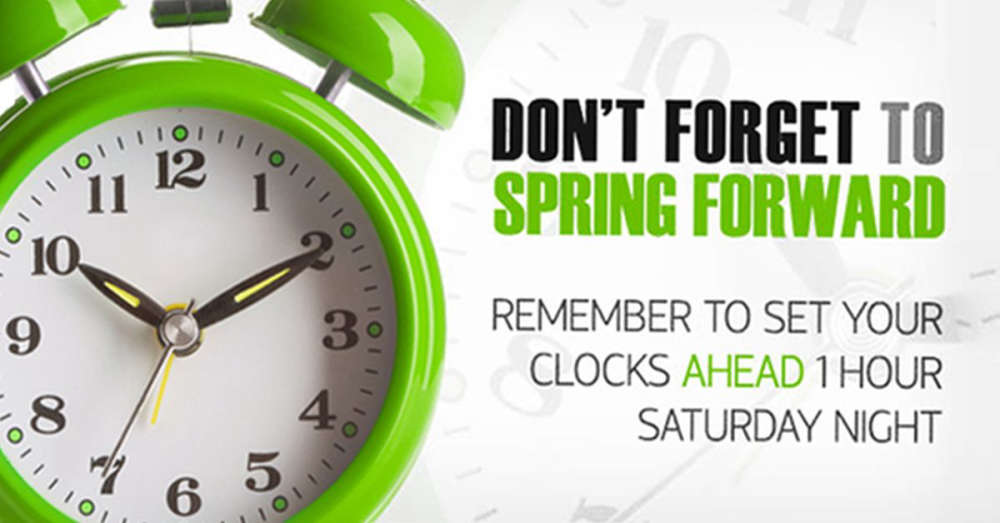
As winter gives way to spring, Americans will need to adjust their clocks — and their sleep schedules — this weekend when daylight saving time begins.
At 2 a.m. Sunday, March 8, clocks will "spring forward" by one hour, meaning sunrise and sunset will occur one hour later than they do now. While the time change brings an extra hour of evening sunlight, it also means losing an hour of sleep Saturday night.
The shift to daylight saving time marks the unofficial transition to warmer weather and longer days. The extended evening daylight will remain in effect until Sunday, November 1, when clocks will "fall back" one hour as daylight saving time ends for the year.
Not everyone in the United States observes the biannual time change. Hawaii and Arizona are the only two states that do not participate in daylight saving time. The U.S. territories of Puerto Rico, Guam, American Samoa, and the U.S. Virgin Islands also keep standard time year-round.
 Lawrence County Veterans Commission moving forward
 Governor Braun delivers another month of gas savings for Hoosier families
 Find a cooling center near you with Indiana 211
 LAFPD Trustee position open
 Statewide standards for E-bikes, E-motos and other electric devices protect riders, pedestrians and motorists
 Lawrenceville city election petitions now available
 Amid measles outbreak in Douglas County, IDPH urges Illinoisans to get vaccinated
 Puntney named as new chairman of LCMH Board
 USDA offers disaster assistance to Ag producers in Indiana impacted by recent flooding
 Two Lawrence County 4-H members are project state champions
 Indiana man dies after weekend motorcycle accident; injuries reported in another in Lawrence County (Ill.)
 Lawrence County man sentenced on federal meth charges
 Heat Advisory in effect for southeastern Illinois
 Legendary 'Indiana Rangers' receive Presidential Unit Citation, Sagamore of the Wabash for Vietnam War heroism
 Meta to pay up to $419M to Indiana, implement sweeping child-safety reforms on Instagram and Facebook
 Wabash River crests at Vincennes; still under flood warning
 Two new conditions now eligible for treatment with medical cannabis